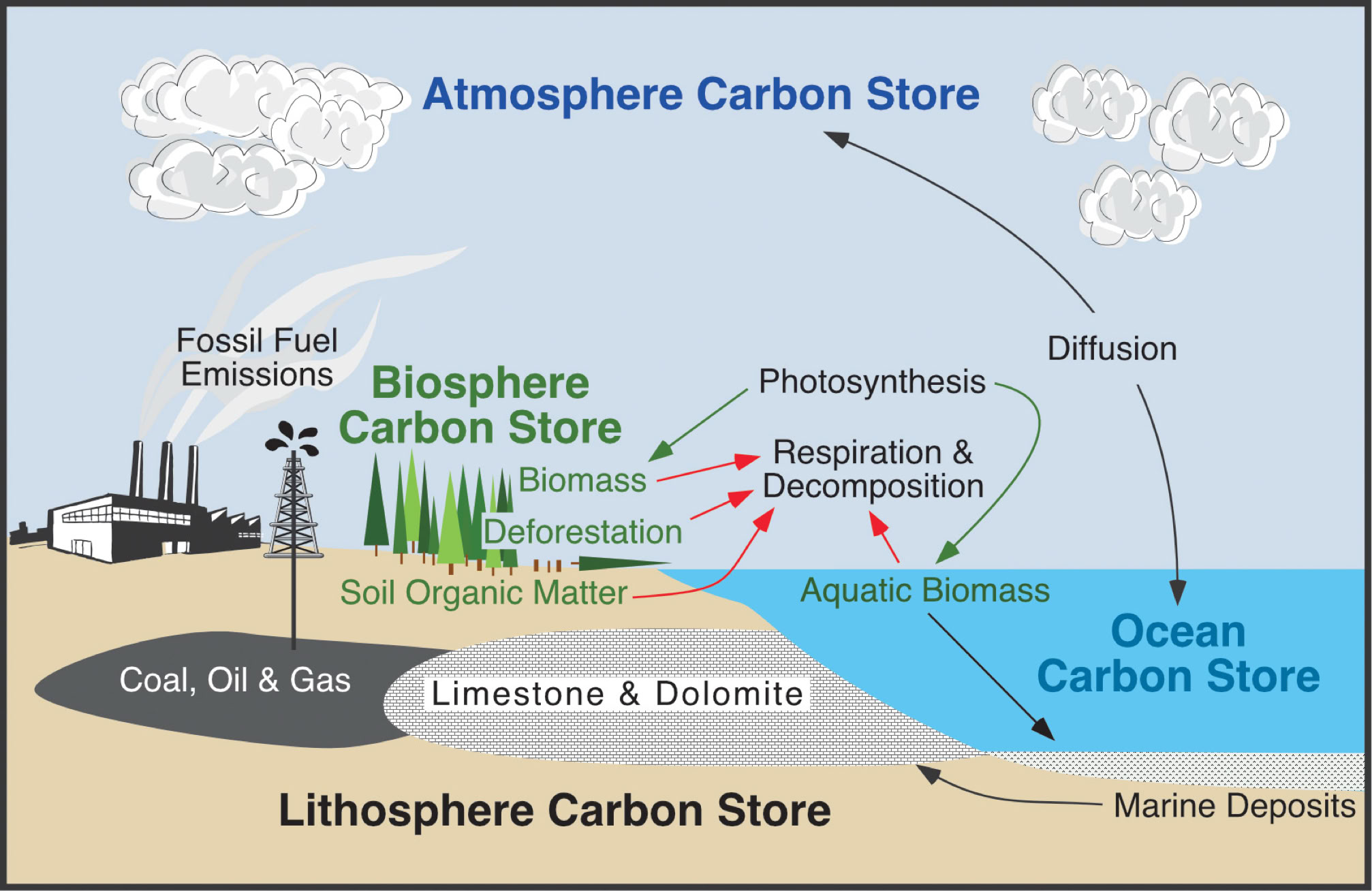
Figure 13.12 Our planet’s carbon cycle. Image Copyright: Michael Pidwirny.
All life is based on the element carbon. Carbon is the principal chemical constituent of most organic matter, from fossil fuels to the complex molecules (DNA and RNA) that control genetic reproduction in organisms. Yet by weight, carbon is not one of the most abundant elements within the Earth's crust. In fact, the lithosphere is only 0.032% carbon by weight. In comparison, oxygen and silicon make up 45.2% and 29.4% of the Earth's surface rocks.
Carbon is stored on our planet in the following major sinks (Figure 13.12 and Table 13.3) according to thecarbon cycle: (1) as the gas carbon dioxide in the atmosphere; (2) in the oceans as dissolved atmospheric carbon dioxide and as calcium carbonate shells in marine organisms; (3) in the lithosphere as fossil fuels and sedimentary rock deposits such as limestone, dolomite, and chalk; (4) as organic matter in soils; and (5) as organic molecules in living and dead organisms found in the biosphere. Within the biosphere, forests contain about 70% of the carbon found in all living organisms inhabiting our planet.
Ecosystems gain most of their carbon dioxide from the atmosphere. Many autotrophic organisms have specialized mechanisms that allow for the absorption of this gas into their cells. With the addition of water and energy from solar radiation, these organisms use photosynthesis to chemically convert carbon dioxide to carbon-based sugar molecules. These organisms can chemically modify these molecules through the metabolic addition of other elements to produce more complex compounds like proteins, cellulose, and amino acids. Some of the organic matter produced in plants is passed down to heterotrophic animals through consumption.
Carbon dioxide enters the waters of the ocean by simple diffusion. Once dissolved in seawater, carbon dioxide can remain as is or can be converted into carbonate (CO3-2) or bicarbonate (HCO3-). Certain forms of sea life biologically fix bicarbonate with calcium (Ca+2) to produce calcium carbonate (CaCO3). This substance is used to create shells and other body parts by organisms such as coral, clams, oysters, some protozoa, and some algae. The shells and body parts of free-floating marine organisms sink to the ocean floor when they die. These materials accumulate to form significant carbonate-rich deposits. After long periods, these deposits of marine sediment are physically and chemically altered into sedimentary rocks. The marine sediments and sedimentary rock found on the ocean floor are by far the largest store of carbon on our planet.
Carbon is released from ecosystems as carbon dioxide gas by the process of respiration. Respiration occurs in plants and animals and involves the breakdown of carbon-based organic molecules into carbon dioxide gas and some other compound byproducts. The detritus food chain contains many organisms whose primary ecological role is the decomposition of organic matter into its abiotic components.
Over several billion years of geologic history, the quantity of carbon dioxide in the atmosphere has steadily decreased. Researchers theorized that this change is in response to an increase in the Sun's output over the same period. Higher levels of carbon dioxide helped regulate the Earth's temperature to levels slightly higher than what is encountered today. These moderate temperatures allowed for the flourishing of plant life despite the lower output of solar radiation. Due to the greater concentration of carbon dioxide gas in the atmosphere, an enhanced greenhouse effect supplemented the production of heat energy through higher levels of longwave counter-radiation. As the Sun grew more intense, several biological mechanisms gradually locked some atmospheric carbon dioxide into fossil fuels and sedimentary rock. In summary, this regulating process has kept the Earth's global average temperature essentially constant over time. Some scientists suggest that this fact is proof of the Gaia hypothesis.
Carbon is stored in the lithosphere in both inorganic and organic forms. Inorganic carbon deposits in the lithosphere include oil shale, carbonate-based sedimentary deposits like limestone, and fossil fuels like coal, oil, and natural gas. Organic forms of carbon in the lithosphere include litter, organic matter, and humic substances found in soils. Some carbon dioxide is released from the interior of the lithosphere by volcanoes. Carbon dioxide released by volcanoes enters the lower lithosphere when carbon-rich sediments and sedimentary rocks are subducted and partially melted beneath tectonic boundary zones.
Since the Industrial Revolution, humans have significantly increased carbon dioxide in the Earth's atmosphere and oceans. Atmospheric levels have increased by over 40%, from about 275 parts per million (ppm) in the early 1700s to about 426 ppm in 2025. Scientists estimate that future atmospheric levels of carbon dioxide could reach an amount between 450 to 600 ppm by the year 2100. The major sources of this gas due to human activities include fossil fuel combustion and the modification of natural plant cover found in grassland, woodland, and forested ecosystems. Emissions from fossil fuel combustion account for about 65% of the additional carbon dioxide currently found in the Earth's atmosphere. The other 35% is derived from deforestation and the conversion of natural ecosystems into agricultural systems. Researchers have shown that natural ecosystems can store between 20 to 100 times more carbon dioxide than agricultural land-use types.