Essential Nutrients for Life
Of the 90 elements naturally occurring on Earth, about 30 are found in the bodies of various organisms inhabiting our planet. Organisms use these nutrients to synthesize organic molecules through various cellular metabolic processes (Table 13.1). Some metabolic processes require only a few nutrient elements to construct organic substances. For example, the production of glucose by photosynthesis in plants requires only hydrogen (H), carbon (C), oxygen (O), and sunlight. Most plants use roots to absorb hydrogen and oxygen as water (H2O) from the soil. Carbon is obtained by the diffusion of carbon dioxide (CO2) gas from the atmosphere directly into photosynthetic cells. Other metabolic processes in organisms, like synthesizing amino acids and proteins, are chemically very complex and require many different chemical elements.
The various nutrients required by life are usually grouped into two categories. Chemical elements needed for metabolism in relatively large amounts are called macronutrients. A macronutrient is often defined as a nutrient that constitutes more than 0.1% of the dry weight of an organism. For most organisms, the necessary macronutrients include oxygen (O), carbon (C), hydrogen (H), nitrogen (N), calcium (Ca), phosphorus (P), chlorine (Cl), potassium (K), sulfur (S), sodium (Na), and magnesium (Mg) (Table 13.2). The most common macronutrients in organic tissues are oxygen, carbon, hydrogen, and nitrogen. Together, these four elements account for about 95% of the organic molecules typically found in organisms.
Organisms also need several nutrients in minute or trace quantities. We call these necessary chemicals micronutrients. Each micronutrient usually represents less than 0.1% of the dry matter weight of an organism. Some common micronutrients required by both plants and animals include aluminum (Al), boron (B), bromine (Br), chromium (Cr), cobalt (Co), copper (Cu), fluorine (F), gallium (Ga), iodine (I), iron (Fe), manganese (Mn), molybdenum (Mo), selenium (Se), silicon (Si), strontium (Sr), tin (Sn), titanium (Ti), vanadium (V), and zinc (Zn).
Deficient or excessive quantities of a micronutrient can sometimes produce harmful effects on an organism. In humans, a lack of dietary iodine can cause serious health problems (Figure 13.1). Shortages of boron, manganese, and molybdenum are pretty common in soils. These deficiencies can have detrimental effects on plant growth (Figure 13.2).
Nutrient Cycling
We have learned that a typical organism requires many macronutrients and micronutrients to survive. The absolute quantity of each nutrient required depends on the organism's size. Simply put, larger organisms require more nutrients than smaller organisms. Organisms gather these nutrients from their environment using two strategies. Autotrophs are self-feeding organisms that can metabolically fix inorganic chemicals into organic matter. It is important to recognize that this metabolic process requires an energy source (such as sunlight or chemical energy from the environment) to power the conversion. All plants, some protists, and some bacteria are autotrophic. Heterotrophs receive their nutrients by feeding on already-fixed organic substances. Animals, fungi, various species of protists, and many species of bacteria all feed by digesting the nutrients stored in the organic matter they consume.
Nutrients move through an ecosystem's abiotic and biotic components in a cyclic fashion (Figure 13.3). The time required to complete one cycle varies by element. For instance, the movement of carbon through one complete nutrient cycle takes about 300 years. While this period may seem long to us, it is relatively short when compared to other elements. Some elements, like phosphorus, take millions of years to complete one full cycle.
Because nutrient cycling involves both biotic and abiotic phases, it is also called biogeochemical cycling. The cyclic movement of nutrients from abiotic stores to living organisms and back to the stores is usually very efficient. External nutrient losses from an ecosystem can increase significantly following a disturbance (Figure 13.4). If these lost nutrients are not available in significant quantities from other reservoirs, the ecosystem’s future productivity will suffer until they are replaced. For this reason, many of our agricultural crops require large fertilizer inputs to sustain yields over time. Each time a crop is harvested, some nutrients stored in the plants are lost from the agroecosystem.
External Nutrient Inputs to Ecosystems
In many ecosystems, the nutrients vital to the existence of plants and animals are made available through four processes: weathering, atmospheric input, biological input, and the addition of inorganic and organic matter (Figure 13.5).
Weathering
Many essential nutrients first enter the biogeochemical cycles of ecosystems through the relatively slow process of rock weathering. The quantities of nutrients released from weathering depend on the type of rocks or sediments being weathered, the availability of moisture for chemical reactions, and the amount of heat energy. Accordingly, nutrient input rates from weathering are highest in the tropics and lowest in desert and cold high-latitude ecosystems.
Over time, weathering causes the disintegration of rocks and minerals into increasingly smaller particles. In the final stages of this process, the nutrients become available for plant uptake through the soil as single atoms of an element or as very simple compounds. For many nutrients, weathering is the primary long-term process by which they are added to ecosystems. Nutrients released in significant quantities by the weathering of surface sediments and bedrock include:
- Calcium, magnesium, potassium, sodium, silicon, iron, aluminum, and phosphorus.
- All the micronutrients.
Atmospheric Input
Many important nutrients are transferred into ecosystems from the atmosphere. This atmospheric addition occurs through two processes: (1) nutrients being carried from the atmosphere to the ground surface in precipitation, and (2) nutrients falling out of the atmosphere in solid form (also called dry deposition). Nitrogen, sulfur, chloride, calcium, and sodium are all added in large quantities to ecosystems through precipitation and dry deposition. Solid forms of nitrogen can enter the atmosphere from lightning, pollution from various human industrial activities and transportation, and biomass burning (Figure 13.6). The quantity of nitrogen added to the Earth’s surface by lightning is about 3 million metric tons annually. Additions of nitrogen to ecosystems from pollution are now 500 percent greater than inputs from lightning. This addition artificially fertilizes natural ecosystems, altering plant community structure and, in some cases, even causing vegetation to die. Contributions from biomass combustion are about twice as great as lightning inputs. Some of the biomass burning on our planet results from humans clearing land to increase agricultural production.
Sulfur enters the atmosphere from both natural and human sources (Figure 13.7). Natural inputs include sulfur dioxide (SO2) emissions from volcanoes, sea spray of sulfate salts (SO4-2), the release of the gas dimethyl sulfide (CH3SCH3) from marine algae, and hydrogen sulfide (H2S) gas from the anaerobic decay of organic matter. Human activity releases sulfur, often from industrial processes that discharge sulfur dioxide and hydrogen sulfide. The various gaseous forms of sulfur described can react with oxygen in the atmosphere to form sulfur dioxide (SO2) and sulfur trioxide (SO3). These gases can then combine with water to produce sulfuric acid (H2SO4), a liquid. Liquid and solid forms of sulfur eventually settle back to our planet’s surface because of the pull of gravity, or they can mix with water in the atmosphere to create liquid and solid forms of acid precipitation.
The atmosphere also contains considerable quantities of chloride, calcium, and sodium salts. These salts enter the atmosphere from the throwing action of crashing waves across the Earth’s oceans. Weather systems then carry some of these suspended salts from the atmosphere above the oceans to the air over the continents. These salts return to the Earth's surface either as dry deposits or dissolved in precipitation.
Biological Input
Through photosynthesis, plants can fix oxygen, carbon, and hydrogen into organic molecules. This organic matter is then passed on to various types of heterotrophs through consumption. As noted earlier in this chapter, these three elements are used to form most organic matter.
Biological nitrogen fixation is a biochemical process where nitrogen gas (N2) from the atmosphere is chemically combined into more complex solid forms by metabolic reactions in an organism. This ability to fix nitrogen is restricted to a small number of species. This particular group of life includes a few species of bacteria (that have symbiotic associations with legumes and some other types of higher plants), several species of actinomycetes (a filamentous form of bacteria), and blue-green algae (cyanobacteria). The amount of nitrogen fixed biologically has been estimated to be around 170 million metric tons per year. This amount is approximately twice the total nitrogen added to ecosystems from non-biological sources.
Symbiotic Nitrogen Fixation by Legumes
Legume is the common name for all plant species belonging to the family Fabaceae. This family of plants comprises about 18,000 species. This group of plants includes agriculturally important plants such as clover, lupins, alfalfa, cassia, beans, peas, peanuts, soybeans, and lentils. An essential defining characteristic of legumes is that they form a symbiotic relationship with bacteria of the genusRhizobium. In this relationship, Rhizobium bacteria colonize plant roots, leading to the formation of nodules (Figure 13.8). Within these nodules, the bacteria absorb nitrogen gas (N2) from the atmosphere and then convert it into forms of nitrogen (nitrate: NO3- or ammonia: NH3) that are usable for its metabolic needs and the nutritional needs of the host plant. In exchange for nitrogen, the symbiotic host plant feeds the bacteria carbohydrates produced by photosynthesis.
Besides feeding the host plant, the nitrogen fixed by the bacteria can also be used by other organisms in an ecosystem in two ways. Some fixed nitrogen seeps out from plant roots and nodules into the soil. Plants in the close vicinity can consume this leaked nitrogen. Furthermore, when the host plant dies, the nitrogen stored in its organic matter can be made available to other plants through decomposition.
Symbiotic Nitrogen Fixation by Non-Legumes
Roughly 170 non-legume species are known to form symbiotic relationships with actinomycetes of the genus Frankia for nitrogen fixation. Tree and shrub species belonging to the alder and birch families (genus Alnus) are good examples of such organisms in terrestrial environments. Tiny floating water ferns belonging to the genus Azolla play a vital role in biologically fixing nitrogen in aquatic environments. In this symbiotic relationship, the water fern pairs up with the cyanobacteria Anabaena azollae. Several species of bacteria and cyanobacteria can fix nitrogen without a symbiotic relationship. These species are often found in habitats as diverse as aquatic environments to the surface soils of hot deserts. In tidal marsh and mangrove ecosystems, cyanobacteria are essential for supporting the high plant productivity characteristic of these environments.
Addition of Inorganic and Organic Matter
The movement of animals, plants, dead organic matter, and inorganic matter into an ecosystem can add significant quantities of nutrients. Many animals can move under their own locomotion. Once migrated to a new site, these organisms may die, leaving behind the nutrients they acquired by consuming organic matter in another habitat. Inorganic and organic matter can also move from one ecosystem to another in solid form through processes like runoff and erosion. Organically bound nutrients are then made available to the receiving ecosystem when organic matter decomposes and is converted back into inorganic substances.
Nutrients dissolved in water can move across ecosystems by leaching, throughflow, groundwater flow, and runoff. Most terrestrial ecosystems receive only small nutrient inputs from the redistribution of matter. In contrast, aquatic systems tend to receive relatively large quantities of nutrients from the relocation of matter. Estuaries, streams, and lakes receive substantial amounts of inorganic and organic matter from runoff and groundwater flows from adjacent terrestrial ecosystems. Aquatic systems also receive substantial organic matter along their boundary with terrestrial ecosystems. Plants along a stream’s shoreline can drop significant leaves into this water body. These leaves can then decompose in the water body or be consumed by fish that later release these nutrients in their excrement.
Nutrient Outputs to Ecosystems
Ecosystems lose important nutrients required by life through two processes: gaseous losses and the loss of inorganic and organic matter via erosion, leaching, throughflow, groundwater flow, runoff, and the migration of organisms (Figure 13.9).
Gaseous Losses
High nutrient losses can also occur when specific environmental conditions promote the conversion and export of these elements and compounds to the atmosphere. When soil is wet and anaerobic, some solid compounds can be chemically reduced to gas. This situation is especially true of soil nitrogen. In a wet, anaerobic environment, several species of bacteria can reduce nitrate (NO3-) and nitrite (NO2-) into gaseous nitric oxide (NO), nitrous oxide (N2O), and nitrogen gas (N2). This reduction process is appropriately known asdenitrification. Experimental studies have shown that under the right conditions, up to 80% of the nitrogen fertilizer applied to crops may be lost due to this process.
As we learned in the previous chapter, many ecosystems experience periodic fires. If these fires cause the volatilization (the conversion of a solid or liquid into a gas) of organic matter, many of the nutrients contained in this biomass can be converted into a gas and lost to the atmosphere. Which nutrients are vaporized depends on the combustion temperature. Nitrogen and phosphorus are converted into a gas at relatively low temperatures of 200° and 300° Celsius, respectively. The combustion of calcium requires temperatures between 1200 and 1400° Celsius. Biomass fires rarely reach temperatures above 540° Celsius.
Loss of Inorganic and Organic Matter
Just as inorganic and organic material may be added to ecosystems, so too may it be lost (Figures 13.5 and 13.9). Soil erosion is probably the most important means of nutrient loss to ecosystems, especially when disturbed. Erosion is very active in agricultural and forestry systems, where cultivation, grazing, and clear-cutting leave the soil exposed and unprotected. When unprotected, the soil's surface is easily transported by wind and moving water. The topmost layers of soil, which contain abundant nutrient-rich organic matter, are the major storehouses of soil nutrients such as phosphorus, potassium, and nitrogen.
Another critical process of nutrient loss is leaching. Leaching occurs when water flowing vertically through the soil transports nutrients in solution downward in the soil profile. Many nutrients can be lost entirely from the soil profile if they are carried further below the ground surface. From the subsurface layers, throughflow or groundwater flow can horizontally transport substances being carried in water to rivers, lakes, or oceans. Generally, leaching losses are highest in disturbed ecosystems (Figure 13.10). In undisturbed ecosystems, efficient nutrient cycling limits the amount of nutrients available for this process. Inorganic and organic substances can also leave ecosystems in dissolved and/or solid form by runoff. Among water-based transport mechanisms, runoff carries by far the greatest amount of material from ecosystems.
The last mechanism moving material out of ecosystems is the migration of organisms. Organisms migrate for several different motives. Probably the most important reason is to track changes in food availability driven by seasonal variations in temperature and precipitation. The movement of organisms out of an ecosystem can also be human-induced. Several organisms, such as fish, are harvested from ecosystems for human consumption.
Internal Ecosystem Nutrient Cycling
In terrestrial ecosystems, the most active site for nutrient cycling occurs in the topmost soil horizons. The main natural inputs to the soil come from weathering, rainfall, fertilizers, atmospheric sources, and organisms. Under natural conditions, inputs from organisms are the most significant in terms of quantity. This addition includes leaves, stems, the dead bodies of plants and animals, animal waste products, and substances washed from plant leaves (foliar leaching). Specialized organisms decompose this organic matter back into inorganic elements. Within the soil, these nutrients can be stored on the soil particles, dead organic matter, or in chemical compounds. Losses or outputs from the soil system include leaching, erosion, gaseous losses (such as denitrification), and plant uptake.
Organic matter decomposition is the primary process that recycles nutrients back into the soil for plant uptake. The decay of organic matter begins with large soil organisms, such as earthworms, arthropods (ants, beetles, and termites), and gastropods (slugs and snails). These organisms decompose the organic matter into smaller pieces through the processes of consumption, digestion, and the excretion of undigested waste. Smaller organisms, such as fungi and heterotrophic bacteria, continue decomposition by feeding on excreted waste and breaking it down into smaller pieces of organic matter (Figure 13.11). In the final stages of decomposition, microscopic fragments of organic matter are finally converted into atoms and molecules of inorganic matter.
The decomposition of organic matter may take several months to several years to complete. The process in tropical regions is relatively quick because moist conditions and high temperatures enhance biological activity.


FIGURE 13.1 Iodine deficiency remains a severe dietary problem that affects people around the world. Too little iodine in one’s diet can lead to several medical issues, including goiter. Goiter is a swelling of the neck caused by an enlarged thyroid gland. Goiter can be prevented by supplementing food with iodine. Image Source: Wikimedia Commons.
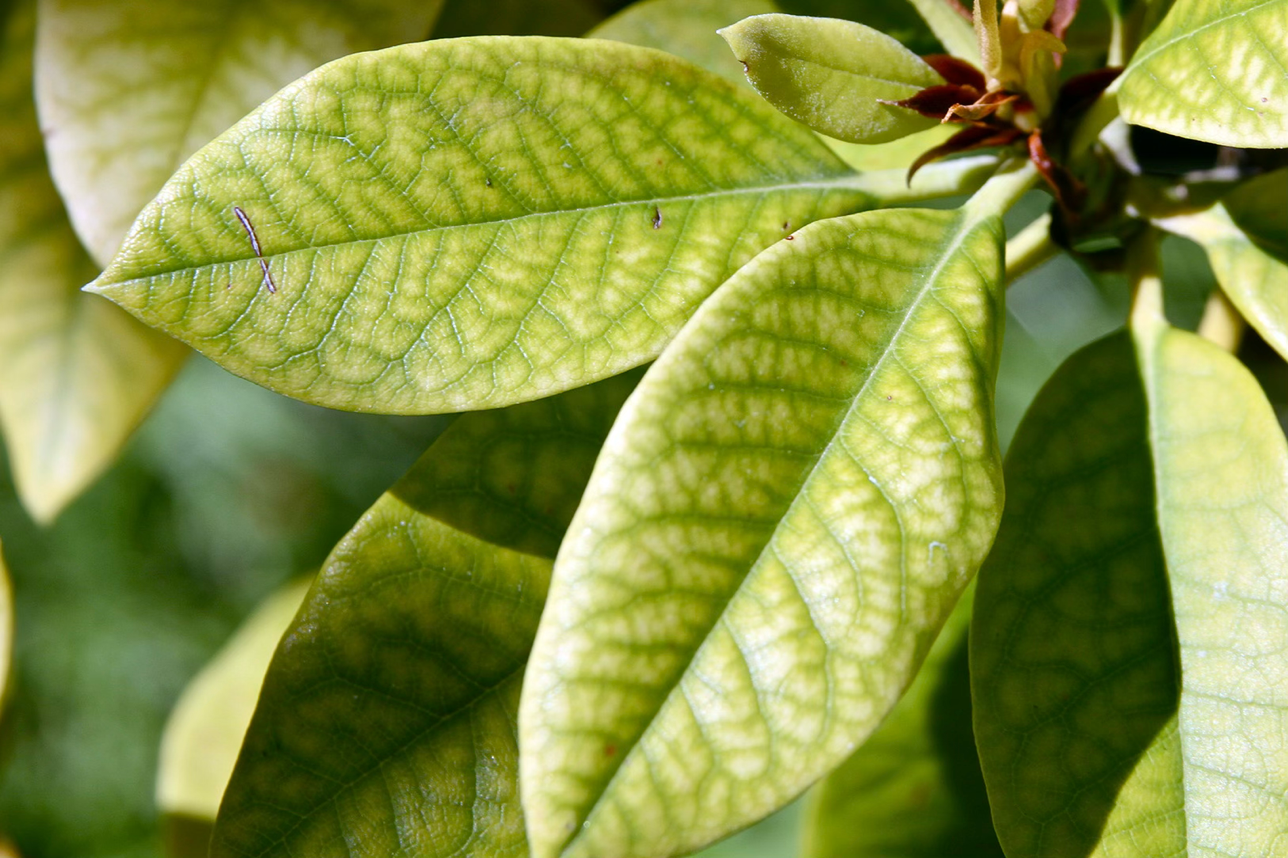
FIGURE 13.2 Plants can occasionally suffer from a manganese deficiency. The most obvious visual symptom of this nutrient deficiency is interveinal yellowing of the leaves. If not treated with a manganese fertilizer application, this plant will experience a significant decrease in growth. Image Copyright: Michael Pidwirny.

FIGURE 13.3 Nutrient cycling of carbon within a hypothetical ecosystem. Carbon is stored in the atmosphere or in an ecosystem's living and dead organic matter. Carbon is transferred from the atmosphere to plants by photosynthesis (green arrow). Plants pass this fixed carbon onto consumer-type organisms through herbivory (red arrow). Detritus feeders and decomposers feed on organic waste products and dead organic matter from plants and consumers (black arrows). Plants, consumers, detritus feeders, and decomposers transfer carbon back to the atmosphere through respiration (blue arrows). Image Copyright: Michael Pidwirny.

FIGURE 13.4 Fire can drastically change the nutrient dynamics of a forest ecosystem. This disturbance quickly releases nutrients stored in living organisms and the soil organic matter by combustion. The high temperatures associated with combustion can vaporize some nutrients, which are then released into the atmosphere. Nutrients stored in organic matter are also converted by combustion into inorganic ash. Some of the nutrients found in this ash are lost to the ecosystem by water and wind transport. Image Source: United States Department of Agriculture, Forest Service.

FIGURE 13.5 Nutrients are gained by ecosystems and their associated internal recycling systems through the four external processes shown above. Image Copyright: Michael Pidwirny.

FIGURE 13.6 Major atmospheric sources of nitrogen input to ecosystems. Image Copyright: Michael Pidwirny.

FIGURE 13.7 The sulfur cycle is illustrated in this graphic. In this model, we can identify four main sulfur stores on our planet: the atmosphere, the biosphere, the hydrosphere, and the lithosphere. Image Copyright: Michael Pidwirny.

FIGURE 13.8 Nodules on the roots of a legume. Inside these nodules are millions of bacterial cells. These bacteria can take N2 gas from the soil atmosphere and convert it into ammonium (NH4) or nitrate (NO3) ions. Most of this nitrogen is then passed on to feed the host plant. In exchange, the host plant provides the bacteria with some of its carbohydrates fixed by photosynthesis. Image Source: Wikimedia Commons, photo by Ninjatacoshell. This Image is licensed under the Creative Commons Attribution-Share Alike 3.0 Unported license.
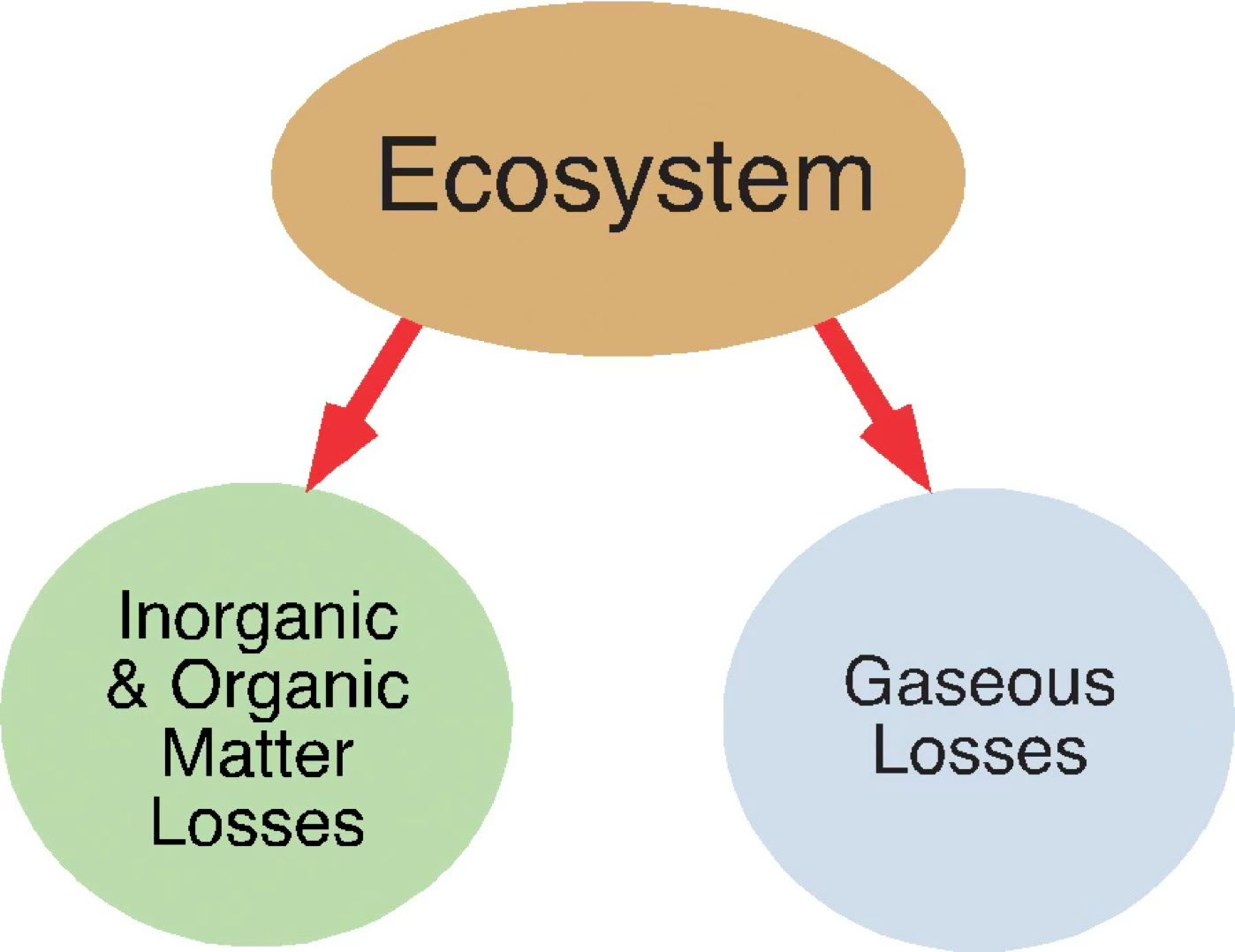
FIGURE 13.9 Nutrients are lost to ecosystems and their associated internal recycling systems through the following two external processes: Inorganic and organic matter and gaseous losses. Image Copyright: Michael Pidwirny.

FIGURE 13.10 The Hubbard Brook Experimental Forest is a 3,160-hectare site in New Hampshire dedicated to the long-term study of forest ecosystems. In 1965, all the trees in one of the many watersheds found in the experimental forest were cut down, and a herbicide was applied for three years to inhibit vegetation re-establishment (see image A). Scientists then monitored and compared the nutrient dynamics of the deforested watershed (watershed 2) with those of a forested watershed (watershed 6). One observation from this experiment was a drastic increase in nitrate concentration in stream runoff from the disturbed watershed (see graph B). With no vegetation present, most of the nitrate usually produced through nitrification was lost to leaching. In the forested watershed, nitrate losses were negligible because the roots of the vegetation consumed this nutrient. Image Source: Hubbard Brook Ecosystem Study, https://www.hubbardbrook.org/.
